Part 2: Why Thyroid Medication Doesn’t Always Work
This is Part 2 of a 3-part thyroid series.
Why Thyroid Medication Doesn’t Always Work (Part 2)
Hello Wellness Seeker,
It has been a few months since we started this thyroid conversation, and there’s more you should know. Back in December, I shared important information about thyroid medication, including research linking levothyroxine (Synthroid) use with higher rates of cancer in observational studies, along with concerns about overprescribing. Read that article here.
One study found that levothyroxine users had a 50% higher risk of cancer at any site compared with non-users.
At the same time, research from Yale suggests that up to 90% of the 23 million Americans taking levothyroxine may not actually need the prescription.
That should make all of us pause.
Today, however, I want to shift the focus away from the problem…and talk about why so many people take thyroid medication and still do not feel better.
The Missing Piece
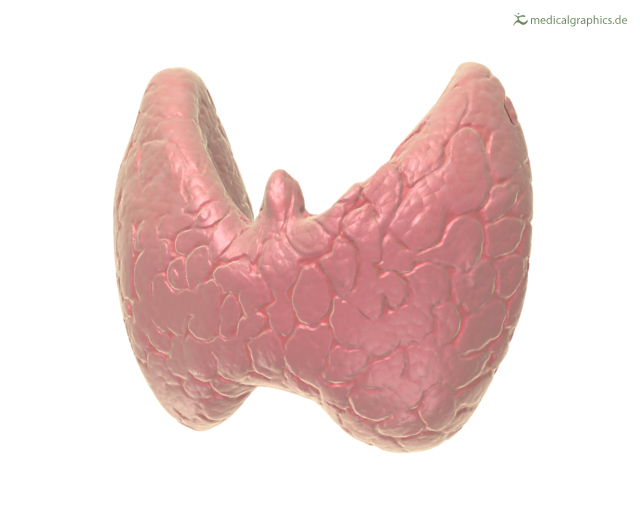
Levothyroxine is the hormone T4. But your body does not use T4 directly. It must be converted into T3, the active thyroid hormone.
This conversion happens mainly in the liver, and a significant portion also occurs in the gut. If that step isn’t working, the medication is basically useless.
How the Thyroid System Actually Works
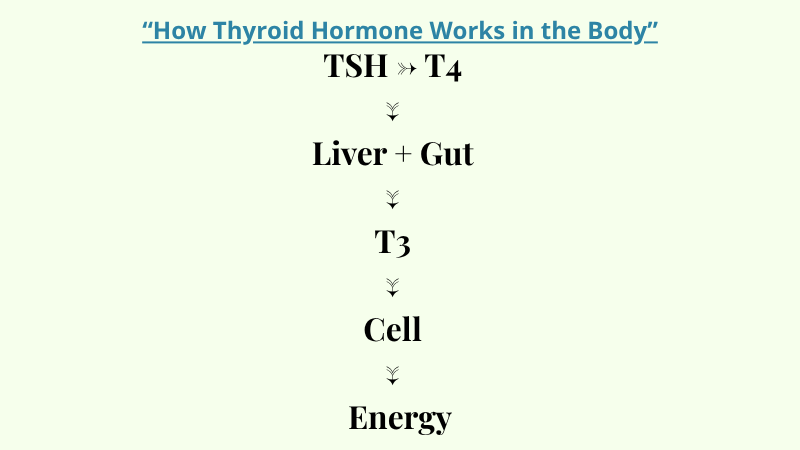
Think of your thyroid like a sequence:
• The brain signals the thyroid (TSH)
• The thyroid produces T4
• The liver and gut convert T4 into T3
• T3 enters the cell and turns metabolism on
If any part of this chain is not working well, the whole system slows down.
What Has to Be Working for This System to Work
-
Nutrients: If any one of these nutrients are low, the system cannot run properly.
Zinc, B12, and magnesium support signaling.
Selenium, iodine, and iron support conversion.
Vitamin A, vitamin D, and omega-3's support cellular response.
Liver and Gut Function: If the liver is sluggish or the gut is inflamed, conversion drops and symptoms continue.
Stress (Adrenal System): Chronic stress can increase reverse T3 (rT3), which blocks T3 from working. So even if your labs look normal, the signal may not be getting through.
Cellular Health: Even if you have enough T3, it has to get into the cell. If the cells are inflamed, metabolism slows. This affects energy, focus, mood, weight, and body temperature.
What I See Every Week in Practice
People who are taking thyroid medication, have “normal” TSH labs, and still feel off. When we look deeper, we often find nutrient deficiencies, chronic stress, liver or gut issues, and inflammation at the cellular level.
Important Note About Biotin
Many hair, skin, and nail supplements are high in biotin.
Biotin can interfere with thyroid lab testing, making results look abnormal when they may not be.
If you are having thyroid labs drawn:
Stop biotin for at least 72 hours before your blood draw.
If you are taking higher doses, consider stopping 5–7 days prior to the lab visit.
This helps ensure your lab results are accurate.
Always let your provider know about any supplements you are taking before lab testing.
A Shift in How We Think About Treatment
Many people have been led to believe that taking a pill means the problem is solved. But if the problem were truly fixed, you wouldn’t need the medication long-term. Medication can be helpful, but it doesn’t always address the reason the problem started in the first place.
At some point, we have to step back, look deeper, and take an active role in restoring our health.
Where You Can Start
Castor Oil Packs: Apply over the thyroid and liver for one hour daily, then a few nights per week. I like Queen of the Thrones castor oil and castor oil packs. They have small ones made specifically for placing over the thyroid.
Infrared Sauna: 30 to 45 minutes to support circulation and detox pathways.
Red Light Therapy: One to three times per week to support cellular energy.
The Takeaway
Thyroid medication is not wrong. But for many people, it is incomplete. Thyroid function depends on nutrients, stress management, liver and gut health, and cellular health. When those are working, the body can begin to function the way it was designed to.
If You’re Still Not Feeling Like Yourself
If you are tired, foggy, or not improving even though you are taking Levothyroxine, you may not have a T4 deficiency. You may have a breakdown in one of the other systems involved in proper thyroid function.
This is where a different approach matters.
I don’t just look at thyroid numbers. I look at the systems behind them — where the breakdown is happening and why the body isn’t responding.
That includes the liver, the gut, the stress fight or flight system, and what’s happening at the cellular level.
When we identify the weak link, we can correct it.
If you’re not sure where to start, I can help you figure that out and build a clear plan to restore your thyroid function naturally.
You don’t have to keep guessing.
Next Step
If you want to look deeper:
Call the office at (239) 260-4566 or schedule online to book your functional medicine appointment.
We will review your labs and symptoms, then build a plan tailored to you.
Stay tuned for my next email, where I will show you exactly how I approach restoring thyroid function and where we start.
Your Health Detective,
Toni Eatros, AP
Acupuncture Physician and Functional Medicine Specialist
Acupuncture and Natural Health Solutions
(1) Wu CC, Islam MM, Nguyen PA, et al. Risk of cancer in long-term levothyroxine users: Retrospective population-based study. Cancer Sci. 2021;112(6):2533-2541. doi:10.1111/cas.14908
(2) Wandell P, Carlsson AC, Li X, Sundquist J, Sundquist K. Levothyroxine Treatment is Associated with an Increased Relative Risk of Overall and Organ Specific Incident Cancers - a Cohort Study of the Swedish Population. Cancer Epidemiology. 2020;66:101707
(3) Plana-Ripoll F, Nørgaard M, Dekkers OM, Jørgensen SP, Sørensen HT. Levothyroxine treatment and the risk of cancer: A nested case-control study. Thyroid. 2023;33(5):563-572. doi:10.1089/thy.2022.0410
(4) Backman I. Levothyroxine: 21 Million Americans May Take a Hypothyroidism Drug They Don’t Need. Yale School of Medicine. March 31, 2023.
Want more natural health insights? Listen to my podcast where I discuss lesser-known approaches to chronic health issues. Listen Now.